
How to Get Lee County Court Records
A record number opens most doors. Search the North Carolina eCourts Portal first, since a public Case Summary often shows one. The case number, the court division, and the document's date all help the Lee County Clerk pull the correct file. The Portal is handy for public docket information. Still, it is not the Clerk's official record, and it cannot promise that a public document image exists. Lee County offers several access channels, and the right one depends on the question. A hearing date may show in the Portal. An original signed order usually needs a Clerk request. State Administrative Office material follows its own route. The statewide records guidance notes that public terminals in clerk offices work too. That includes when a browser search leaves a local record question open.
- Find the Lee record number, court, and relevant event or document date.
- Check the Portal Case Summary for public event, hearing, and document availability.
- Contact or visit the Lee Clerk for inspection, a copy, certification, or a paper-file question.
- Say whether the request is ordinary, certified, under seal, exemplified, audio, or transcript-related.
- Confirm the current fee and payment procedure before sending money or a request.
Lee County Portal and Official Records
The Portal and the Clerk do different jobs. A Portal Case Summary gives an online public view of a record number, its status, events, hearings, and any conditional case blocks. The official FAQ is blunt on one point. The Portal is not the official court record. The Lee County Clerk of Superior Court keeps the authoritative trial-court file and issues certified copies. That line matters when exact wording counts. A Case Summary can point you to a docket event, but the online display is not proof of a document's precise legal terms. When you still need to find the case itself, the county Lee County case search route explains Smart Search and its public access limits.
Types of Lee County Court Records
A docket is just one kind of court record. The Register of Actions lists a case's dated event history. Beyond it, a file may hold pleadings, notices, orders, judgments, exhibits, financial material, transcripts, or audio. The mix depends on the proceeding. What is public varies from case to case. So name the precise item you want. Do not ask broadly for everything tied to a person or case.
| Record type | First Lee route | Important limit |
|---|---|---|
| Register of Actions | eCourts Portal or Clerk terminal | Public view is not a certified record. |
| Filed document | Portal if publicly available, then Lee Clerk | Not every filed image is public or online. |
| Plain copy | Lee Clerk | It does not carry Clerk certification. |
| Certified copy | Lee Clerk of Superior Court | Portal printouts do not substitute. |
| Transcript or audio | Statewide process and Clerk routing | The method depends on the proceeding and confidentiality. |
Lee County Clerk Record Channels
Need a copy of a Lee County court record? The Judicial Branch's obtaining court records page lays out two things worth knowing. Public terminals sit in clerks' offices and let you search court information on the spot. Paper files, meanwhile, stay in the county where the case was filed or assigned. So for a Lee County docket on paper, the Clerk of Court is the office to ask. Ask about inspection, copies, certification, or any restriction on a record.
Some things the county page simply does not publish. There is no universal Lee online copy-order form. There is no records-counter email, no blanket response deadline, and no general fax route. Call the Clerk instead. And do not confuse a payment mailing address with a records request address. The local payment route covers eligible payments only. It does not mean every copy request can travel the same road.
One more pointer helps here: the Judicial Branch record-access page spells out clerk terminals, paper-file access, and copy routes.
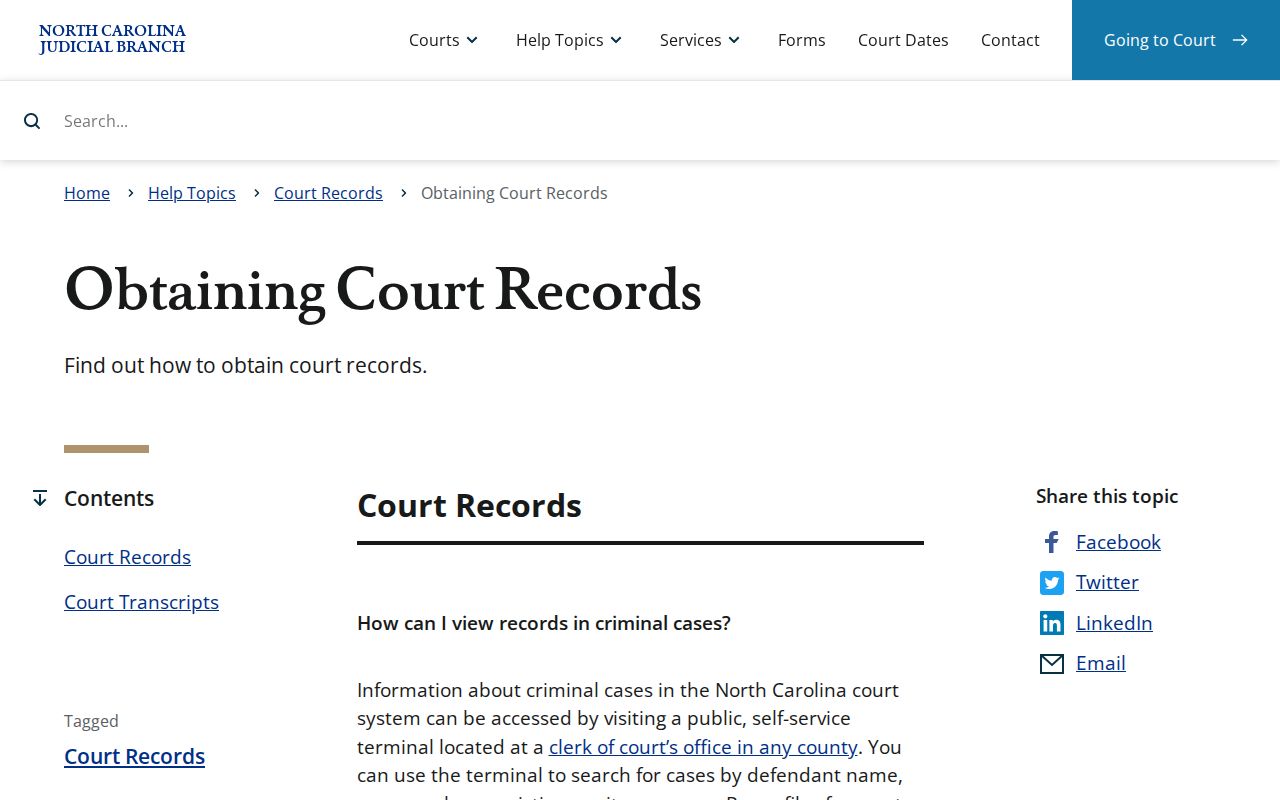
State guidance backs both the Clerk route and the public-terminal option alongside any online Lee County search.
What a Lee County Court Record Contains
What a public record contains depends on the case type. The Portal guide supports describing identity, location, case type, status, parties, assignment, event history, hearing information, financial information, dispositions, and public documents where they apply. It does not promise that every Lee file has all of these blocks. Nor does it promise that all data, documents, or images are public. That promise just is not there.
| Record number | Identifies the Lee case and should appear on a request when known. |
|---|---|
| Case information | May include court location, case type, status, parties, attorneys, and assignment. |
| Register entries | Records dated filings, notices, orders, settings, and other court actions. |
| Hearing data | Can show a setting where applicable; confirm a time-sensitive date with the court. |
| Disposition | Shows a procedural result or status, not necessarily the controlling text of an order. |
| Documents | May be available when public and processed; confidentiality can remove access. |
Lee County Precise Copy Requests
A focused request helps the Clerk find the right record without creating a new report. Include the Lee record number if you have it. Add the court division, the parties or caption, the document or Register entry you want, its approximate date, and the copy form you need. G.S. 132-6.2 covers copies, actual costs, and requested media when practical. It also says a custodian need not create or compile a record. The record must already exist. No Lee-wide web form exists for all court-file copy requests. A checklist is not a standardized Clerk form. Ask the Clerk about the current method, payment form, delivery choice, and any access restriction. That beats guessing at a turnaround time or an identification requirement. No official local source states one.
Certified Copies and Lee County Fees
For the figures, the Judicial Branch miscellaneous-cost chart effective January 1, 2025 is the source. These are statewide clerk charges. They are not a promise of today's Lee County price. Confirm with the Clerk before you request anything. The chart separates preparation of ordinary copies from copies of a record or docket document. It also separates certification under seal from exemplification.
| 2025 state-chart item | Amount or method |
|---|---|
| Certificate under seal | $3.00 |
| Exemplification | $10.00 |
| Preparing ordinary copies | $2.00 first page, then $0.25 each additional page |
| Record or docket document copy | $6.00 first page, then $0.25 each additional page |
| Criminal record search | $25.00 |
Lee County Clerk of Superior Court
Lee County Courthouse
1400 S. Horner Blvd.
Sanford, NC 27330
919-718-6300
Ask the Clerk about the current fee, any certification need, and the accepted payment route before you pay.
Lee County and NCAOC Requests
The NCAOC public-records request form is a separate channel. It aims at records held by the North Carolina Administrative Office of the Courts. It says so itself. NCAOC is not the custodian of court documents. The form points court-document requests back to the county Clerk. That makes it the right tool for administrative records, not for a Lee County case file, a court order, or a certified local copy.
Watch the fee figures too. NCAOC policy covers written requests, form requests, costs, and administrative-record procedures. It cites a $0.25-per-page administrative copy cost. That number belongs to state administration. It should not be transposed onto a Lee Clerk docket-document fee. The source and the custodian are simply different. The NCAOC request form keeps that state-administration purpose clear.
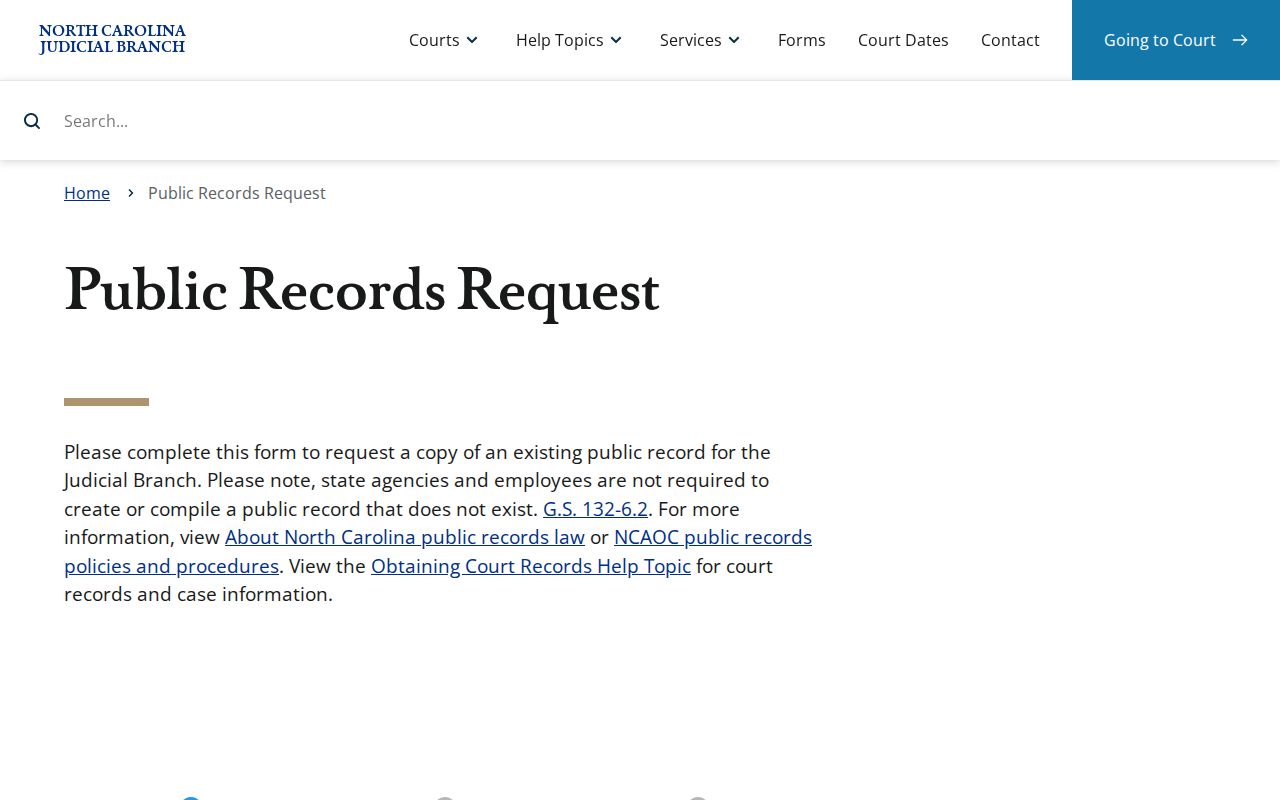
Need a copy of a Lee County case document? Go through the Clerk instead.
That state administrative form handles NCAOC business and was never meant for pulling case copies from a Lee County docket.
Public Access and Sealed Lee Records
North Carolina law gives the public a right to inspect clerk-maintained court records during regular office hours. Access stops where law blocks it. The records open under G.S. 7A-109 set the baseline, not the ceiling for secrecy. Juvenile files, sealed matters, expunged cases, protective orders, and other confidential material keep their protections. So when a Portal search leaves a Lee County record out, a legal restriction may be the reason. That is not a signal the Clerk must hand it over some other way.
Access boundary: G.S. 7B-3000 limits inspection of juvenile records, and G.S. 7B-2901 makes abuse, neglect, and dependency court records confidential. An expunged or sealed matter is not a public Portal result. Ask the Lee Clerk about a lawful access process if one applies; do not assume a counter or terminal bypasses a restriction.
Lee County Audio and Transcripts
Copies and recordings follow different rules. A transcript or audio request is not the same as a document-copy request. Statewide court-records guidance splits the two paths. It separates work by an official court reporter from proceedings a digital court reporter covers. Form AOC-G-114 requests nonconfidential audio. Form AOC-G-115 handles confidential audio that needs a court order. The right form depends on the individual Lee County proceeding and its access status.
For a specific case, give the Clerk the details up front. Bring the record number, court division, hearing date, and the type of recording or transcript you want. The Clerk can route the request. Not every District Court proceeding produces the same recording, though. And not every recording is public.
Say which part of the proceeding you need. A case can hold multiple hearings. A public docket entry alone will not tell you which recording method was used. The Clerk can identify the local record route. You carry the duty to honor confidentiality and court-order requirements. If an order limits access, ask about the lawful procedure. Do not presume an audio form will override the limit.